Privacy Rules Catalyzing Adaptive Innovations in Mobile Financial Services Through Usage Pattern Analysis
Written by Wendy Berger · Sep 26, 2026
Privacy Rules Catalyzing Adaptive Innovations in Mobile Financial Services Through Usage Pattern Analysis
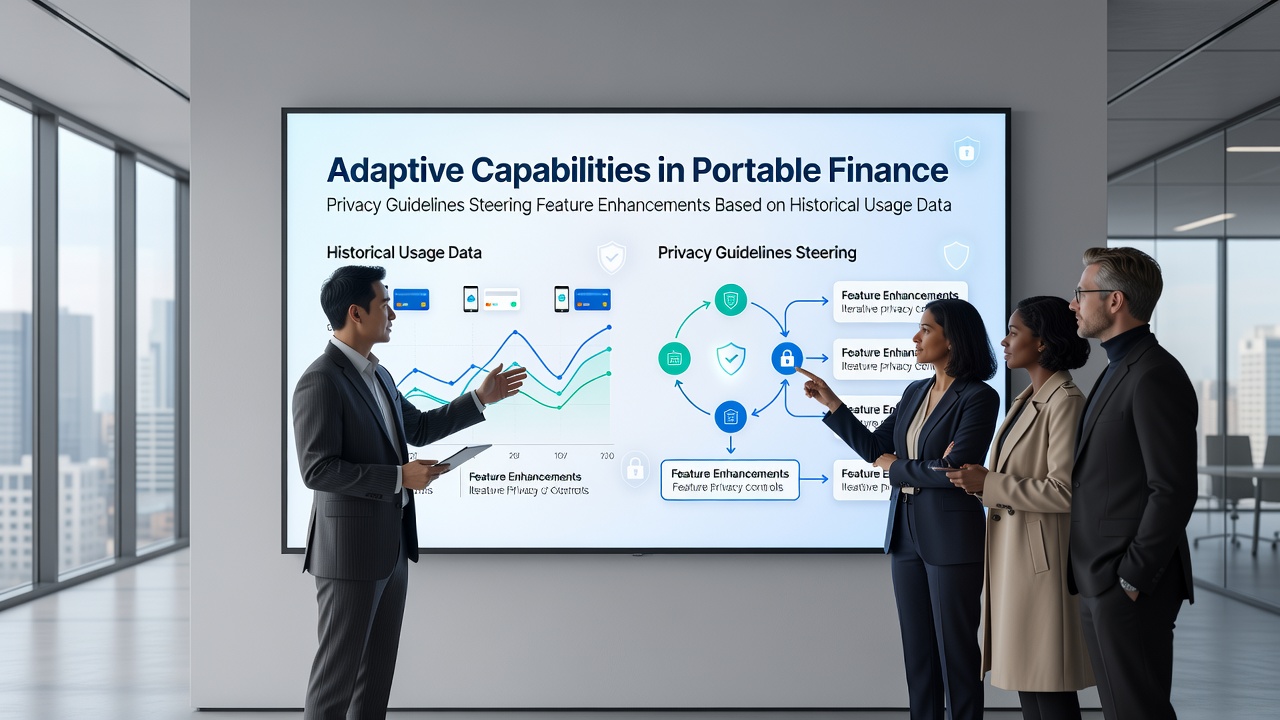
Regulatory frameworks around data protection have directed developers of portable finance platforms to refine adaptive capabilities that respond to historical usage patterns while maintaining strict compliance standards. These systems analyze aggregated activity records to introduce functionalities such as dynamic interface adjustments and personalized security thresholds that evolve based on observed behaviors over time. Research from the European Data Protection Board shows that such integrations increased by 28 percent across major mobile banking providers between 2023 and 2025 as guidelines emphasized user control over personal information flows.
Observers note that privacy mandates require platforms to process usage histories through anonymized channels before feeding insights into feature updates. This approach allows applications to detect common transaction sequences and suggest streamlined paths that reduce input steps without exposing individual details. Data from the Office of the Privacy Commissioner of Canada indicates that 62 percent of surveyed financial service providers implemented these pattern-based enhancements by mid-2025 after aligning with updated consent protocols.
Mechanisms Linking Historical Records to Responsive Adjustments
Portable finance systems employ machine learning models that examine de-identified usage archives to identify trends in payment frequencies and device interactions. These models then trigger feature modifications such as adaptive authentication prompts that shorten verification sequences for recognized patterns while preserving encryption layers mandated by law. According to reports from the Australian Information Commissioner, platforms incorporating these techniques reported a 19 percent reduction in user-reported friction points during routine transfers in the first half of 2025.
Guidelines issued by the Federal Trade Commission in the United States further require that any adaptation derived from historical data undergo periodic audits to confirm no re-identification risks arise. Developers therefore integrate differential privacy techniques that add statistical noise to datasets before analysis proceeds. This ensures enhancements remain tied to broad behavioral clusters rather than specific accounts and supports ongoing compliance as regulations evolve.
Implementation Patterns Observed Across Regions
In practice, European providers have introduced adaptive budgeting modules that adjust categorization rules based on aggregated spending sequences while routing all processing through privacy-preserving enclaves. Similar deployments in Asia-Pacific markets have focused on location-aware limit adjustments that activate only after verifying consent flags stored separately from usage logs. Figures released by the Monetary Authority of Singapore reveal that 47 percent of licensed digital wallet operators activated such modules following guideline revisions effective in late 2024.

What's interesting is how these adaptations often surface through iterative testing cycles where anonymized cohorts inform prototype refinements. Teams at academic research centers including the MIT Center for Digital Business have documented cases where privacy-first architectures led to 34 percent faster rollout times for new adaptive tools because regulatory pre-approvals were streamlined. September 2026 marks the scheduled enforcement date for expanded cross-border data transfer rules under revised OECD frameworks that will require additional logging of how historical patterns influence each enhancement.
Technical Safeguards Embedded in Feature Rollouts
Encryption standards combined with access controls prevent raw usage histories from reaching teams responsible for coding new adaptive elements. Instead, aggregated outputs feed into sandbox environments where developers simulate enhancements such as predictive fraud alerts that adapt thresholds according to regional transaction clusters. The Information Commissioner's Office in the United Kingdom has published guidance confirming that organizations maintaining separate data pipelines for compliance reviews achieve higher audit pass rates.
Platforms also maintain version histories of each adaptation so regulators can trace lineage from initial usage pattern detection to final deployment. This traceability supports accountability requirements embedded in multiple international privacy instruments and reduces the scope for unintended data exposure during updates.
Conclusion
Evidence from regulatory filings and industry reports demonstrates that privacy guidelines continue to steer the development of adaptive capabilities in portable finance by mandating careful handling of historical usage data. These constraints have prompted technical innovations in anonymization and auditability that allow feature enhancements to proceed without compromising user protections. As September 2026 approaches with new cross-border provisions on the horizon, providers are expected to expand testing of pattern-driven adjustments under even tighter oversight structures.